Most social video is watched on mute — which means text is not decoration, it is the soundtrack. Whether you need a title card, a location label, or word-for-word captions, knowing how to add text on a video is now as basic a skill as cropping a photo.
There are two different jobs hiding in this question: adding a few text overlays (titles, labels) and adding full captions (everything spoken, synced to speech). This guide covers both, on every device — including the AI route that captions an entire video in minutes.
How to Add Text to an iPhone Video
iPhones give you three free built-in routes, depending on how much control you want:
Option 1: iMovie (Free, Most Control)
- Open iMovie, create a Magic Movie or new project, and add your video.
- Tap the clip in the timeline, then tap the T (Titles) button.
- Pick a style, then tap the on-screen text to edit the words.
- Drag the text to position it, and trim how long it stays on screen.
- Export via the share button — done, no watermark.
Option 2: Clips App (Fastest for Social)
Apple's Clips app adds animated titles, stickers, and Live Titles — captions generated as you speak while recording. It is built for quick social posts rather than precise editing.
Option 3: Third-Party Editors
CapCut, InShot, and similar free editors offer more fonts, animations, and precise timing than the built-ins. Watch for watermarks on free tiers and check each app's privacy terms before uploading sensitive footage.
Android and Desktop, Briefly
- Android: Google Photos offers basic text on videos (Edit > Markup > Text on many devices); CapCut and InShot cover advanced needs.
- Windows: Clipchamp (built into Windows 11) adds titles and auto-captions.
- Mac: iMovie works the same as on iPhone; DaVinci Resolve is the free step up.
- Any browser: online editors handle quick jobs without installs — pair them with an online video converter if your format is unsupported.
Full Captions: Let AI Do the Typing
Typing captions by hand takes 4 to 10 minutes per minute of video — nobody sustains that. The AI workflow takes three steps:
- Transcribe: an AI subtitles generator converts the speech to time-coded text automatically.
- Review: fix names, jargon, and punctuation — a few minutes, not hours.
- Burn or attach: use a subtitles to video tool to embed the captions permanently, or upload the subtitle file alongside the video on platforms that support it.
From speech to text in one step with Notie
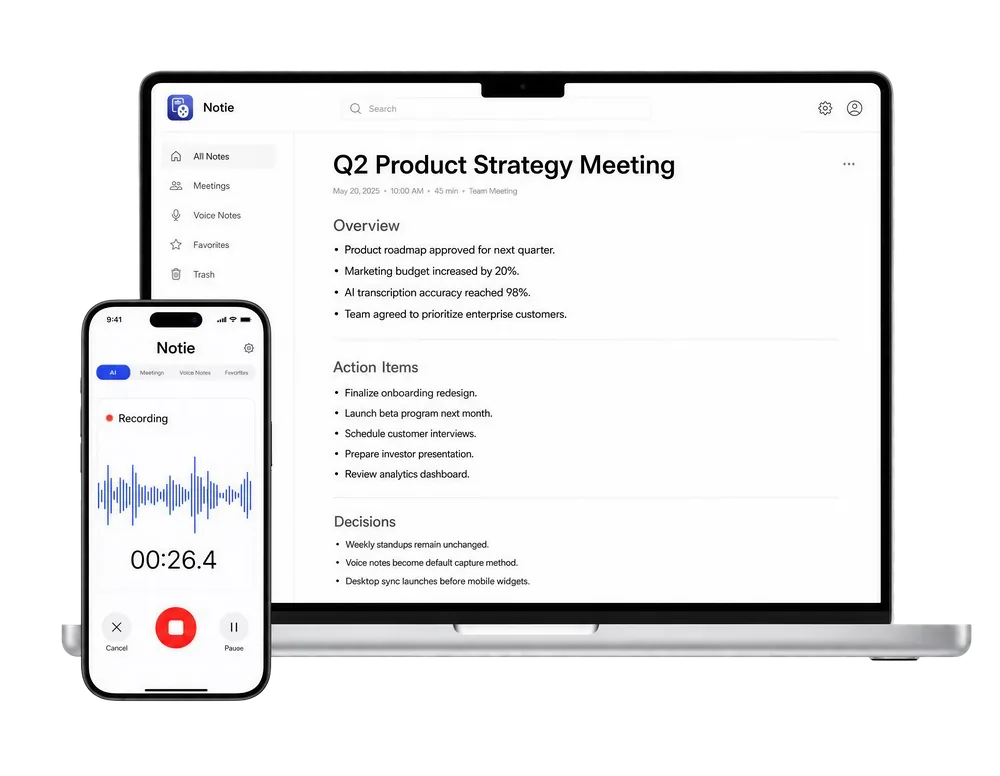
Notie transcribes video and audio with AI accuracy in 100+ languages — the foundation for captions, clips, and summaries. Try it free on iOS and Android and never type a caption again.
Start for FreeWhich Method Should You Use?
| Goal | Best method | Time needed |
|---|---|---|
| Title card on a clip | iMovie / Google Photos | 2 minutes |
| Animated social text | CapCut or Clips | 5-10 minutes |
| Full captions, short video | AI subtitles generator | Minutes |
| Full captions, long video | Transcribe first, then sync | Review time only |
| Professional project | Desktop editor (Resolve, Premiere) | Varies |
Text-on-Video Best Practices
- Stay in the safe zone. Keep text away from edges and platform UI areas (progress bars, buttons).
- Contrast is king. White text with a subtle shadow or dark band survives any background.
- Two fonts maximum. One for titles, one for captions.
- Time it to reading speed. Roughly 2 seconds minimum for a short line.
- Caption everything spoken. Accessibility and muted-autoplay reach are the same feature.
Overlays are a two-minute job in free built-in apps; captions are an AI job, not a typing job. Get the words right first — a clean video transcript is the raw material for captions, descriptions, and clips alike.