A Zoom Meeting and a Zoom Webinar look similar but behave like different products. Meetings are conversations: everyone can unmute, share video, and interrupt. Webinars are broadcasts: a small set of hosts and panelists present to an audience that watches, asks questions through Q&A, and never appears on camera. Pick the wrong format and you either fight chaos or kill discussion.
This guide covers when a webinar is the right call, what it costs, the setup process from scheduling to follow-up, and how to squeeze weeks of content out of a single session's recording.
Zoom Webinar vs Zoom Meeting: The Real Differences
| Feature | Meeting | Webinar |
|---|---|---|
| Attendee audio/video | Everyone can share | View-only; panelists present |
| Best for | Team discussions, workshops | Product launches, training, town halls |
| Audience size | Up to plan limit, all interactive | Hundreds to thousands, broadcast style |
| Interaction tools | Chat, breakout rooms, reactions | Q&A, polls, chat, raise hand |
| Licensing | Included in paid Zoom plans | Paid add-on license |
| Registration pages | Basic | Built-in registration and email reminders |
Rule of thumb: under about 30 people who all need to talk, use a meeting. Presenting to an audience that mostly listens, use a webinar — the control alone is worth it.
What a Zoom Webinar Costs
Webinars require a paid add-on license on top of a paid Zoom plan, priced by maximum attendee capacity (tiers typically start in the hundreds of attendees and scale to thousands). Prices change, so check Zoom's current pricing page — but budget for both the base plan and the webinar add-on per host.
How to Set Up a Webinar With Zoom
- In the Zoom web portal, go to Webinars and click Schedule a Webinar.
- Set the topic, date, duration, and whether registration is required (recommended — you get emails for follow-up).
- Add panelists by email; they get their own join links with full audio and video rights.
- Enable Q&A, polls, and practice session in the options — the practice session lets hosts and panelists rehearse before going live.
- Configure automatic recording (cloud recommended) so nothing depends on someone remembering to hit record.
- Publish the registration link, then start 30 minutes early in practice mode to check audio, slides, and lighting.
Turn your webinar into notes attendees will actually keep
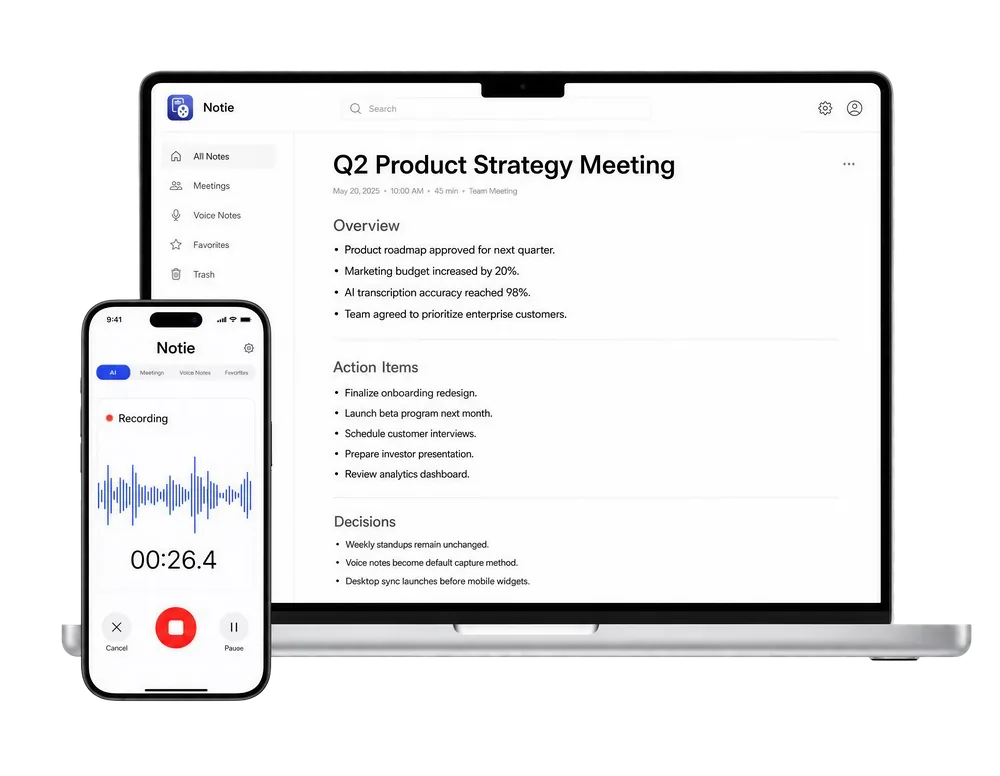
The webinar ends; the content shouldn't. Notie transcribes your session in 100+ languages and generates AI summaries with the key takeaways — perfect for follow-up emails, recap posts, and attendees who missed it live. Record with Notie free on iOS and Android.
Start for FreeEngagement Tactics That Keep Attendees Watching
- Launch a poll in the first five minutes to convert passive viewers into participants.
- Assign a co-host to triage Q&A live so good questions surface while you present.
- Break content into 10-minute segments with a transition or interaction between each.
- Show faces: audiences retain more from a speaker on camera than slides alone.
- End with a specific call to action, not just "thanks for coming."
After the Webinar: Repurpose Everything
The recording is raw material for weeks of content. Run it through a video to text tool to get a transcript for your blog, compress the highlights with a video summarizer for social clips, and send registrants an AI summary with timestamps instead of a bare recording link — recap emails with key points get dramatically better engagement than "here's the video." Teams that run webinars regularly keep an AI meeting assistant like Notie in the workflow so every session automatically becomes searchable, shareable text.
A webinar with Zoom is a broadcast production: license the add-on, rehearse in practice mode, engage relentlessly, and treat the recording as the beginning of the content's life rather than the end.