Someone downloads your pricing guide at 11 p.m. By 11:01 they have a thank-you email. Three days later, a case study arrives. When they visit your pricing page twice in a week, your sales rep gets an alert. No marketer touched any of it — that is marketing automation doing what it does best: executing repetitive, rule-based work at a speed and consistency no team can match.
This guide explains what marketing automation is, how it actually works under the hood, where it delivers the most value, and how AI is rewriting parts of the playbook.
Marketing Automation, Defined
Marketing automation is software that performs marketing tasks automatically based on triggers and rules: sending email sequences, segmenting audiences, scoring leads, posting scheduled content, and routing hot prospects to sales. The core logic is always the same — when X happens, do Y. When someone joins the newsletter, send the welcome series. When a lead's score passes 80, notify sales.
How It Works: The Four Building Blocks
- Triggers: the events that start a workflow — a form fill, a purchase, a page visit, a date.
- Conditions: the if/then logic that branches paths — "if they opened the last email, wait 2 days; if not, resend with a new subject."
- Actions: what the system does — send, tag, score, alert, update the CRM.
- Data: the contact history that makes targeting possible; automation is only as smart as the data feeding it.
Classic Examples That Earn Their Keep
| Automation | Trigger | Why it works |
|---|---|---|
| Welcome series | Newsletter signup | Highest-engagement window in the lifecycle |
| Abandoned cart | Items left at checkout | Recovers revenue that was one click away |
| Lead scoring | Engagement and profile signals | Sales calls the ready buyers first |
| Re-engagement | 90 days of inactivity | Cheaper than acquiring a new subscriber |
| Post-purchase | Completed order | Drives reviews, referrals, and repeat sales |
Marketing Automation vs. AI Marketing
The terms get blended, but the distinction is useful: automation executes rules you wrote, while AI generates and interprets content. Automation sends the email at the right moment; an AI marketing tool writes the email, predicts the best send time, and summarizes how the campaign performed. Modern platforms fuse both — rules for reliability, AI for the judgment calls — and tools like an AI text generator increasingly draft the content that automation delivers.
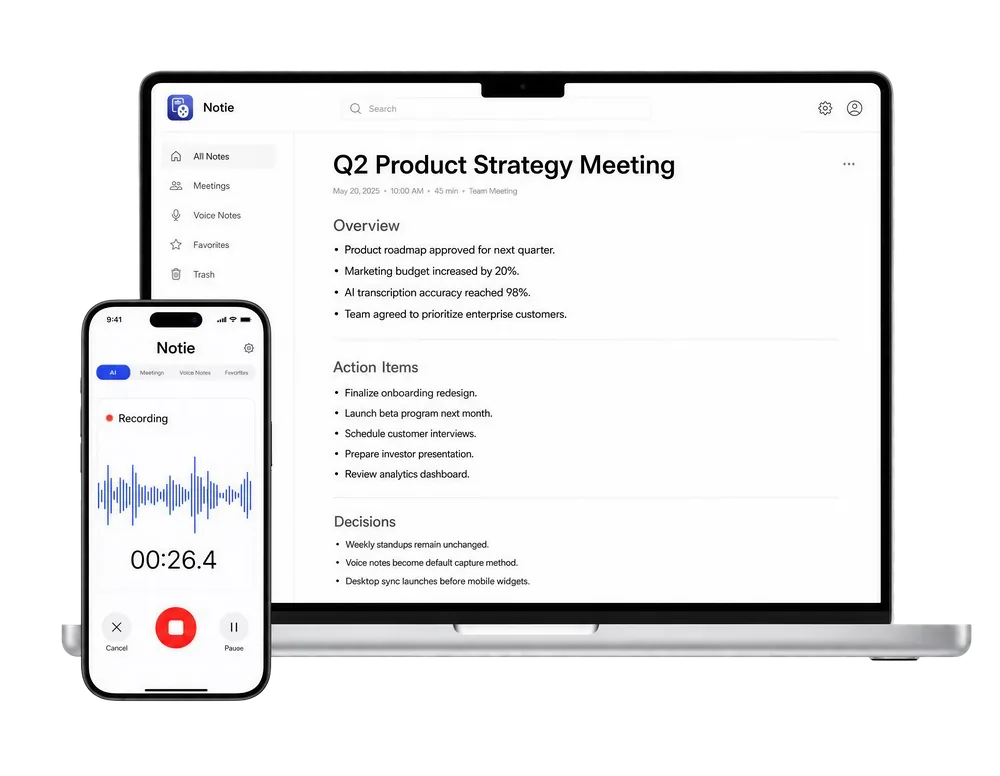
Automate your meeting notes too
Campaign planning lives in meetings — and decisions evaporate without notes. Notie records your marketing syncs and client calls, then delivers AI summaries with action items automatically. Free on iOS and Android.
Start for FreeGetting Started Without Overbuilding
- Start with one workflow — a welcome series is the classic first win — and expand only after it runs cleanly for a month.
- Map the journey before building. Sketch the trigger, branches, and exit conditions on paper first.
- Set exit rules. Nothing erodes trust like getting a "come back!" email after you already purchased.
- Review quarterly. Automations rot silently as products, prices, and pages change.
- Keep the human checkpoints. Automate delivery and timing; keep strategy, offers, and tone under human review.
Common Pitfalls
The failure mode of marketing automation is not technical — it is over-automation. Sequences that never end, personalization tokens gone wrong, and robotic replies to genuine questions all trade short-term efficiency for long-term trust. The best practitioners automate the plumbing and stay personally present at the moments that matter: pricing conversations, complaints, and renewals. Feed the machine good inputs, too — teams that summarize customer calls and campaign retros (an AI summarizer makes this painless) build automations grounded in what customers actually say.
Marketing automation will not invent your strategy, but it will execute it every hour of every day without forgetting a step. Start small, measure honestly, and let the robots do the repetition.