Perplexity and ChatGPT get lumped together as "AI chatbots," but they were built with opposite philosophies. Perplexity is an answer engine: every response starts with a live web search and comes back with numbered citations. ChatGPT is a reasoning engine: it generates answers from its training and its conversation with you, reaching for the web only when needed.
That single design difference explains almost everything about when each tool wins. Here is how they compare on research, writing, accuracy, and price, plus the workflow most power users have settled on.
The Core Difference: Citations vs Conversation
Ask Perplexity a factual question and you get a concise answer with sources you can click and verify, which makes it feel like Google Search with the reading done for you. Ask ChatGPT the same question and you get a fuller, more conversational answer that is easier to build on but harder to verify at a glance. For anything you might need to defend in a meeting or cite in a report, Perplexity's receipts matter.
Head-to-Head Comparison
| Factor | Perplexity | ChatGPT |
|---|---|---|
| Primary job | Cited answers from live web search | Conversation, writing, and reasoning |
| Citations | Always, by default | Only in browsing mode |
| Creative writing | Limited | Excellent |
| Follow-up depth | Good for drilling into sources | Excellent for open-ended exploration |
| Custom assistants | Spaces and collections | Custom GPTs ecosystem |
| Free tier | Yes, generous for search | Yes, with usage limits |
When Perplexity Is the Better Choice
- Researching current events, prices, statistics, or anything time-sensitive
- Fact-checking claims before you repeat them
- Comparing products or services with sources you can inspect
- Academic-style research where you need a trail back to original material
When ChatGPT Is the Better Choice
- Drafting emails, essays, scripts, and marketing copy
- Brainstorming, role-playing scenarios, and thinking out loud
- Coding help, debugging, and step-by-step explanations
- Long, multi-turn projects where the AI needs to remember context
Neither one was in your meeting
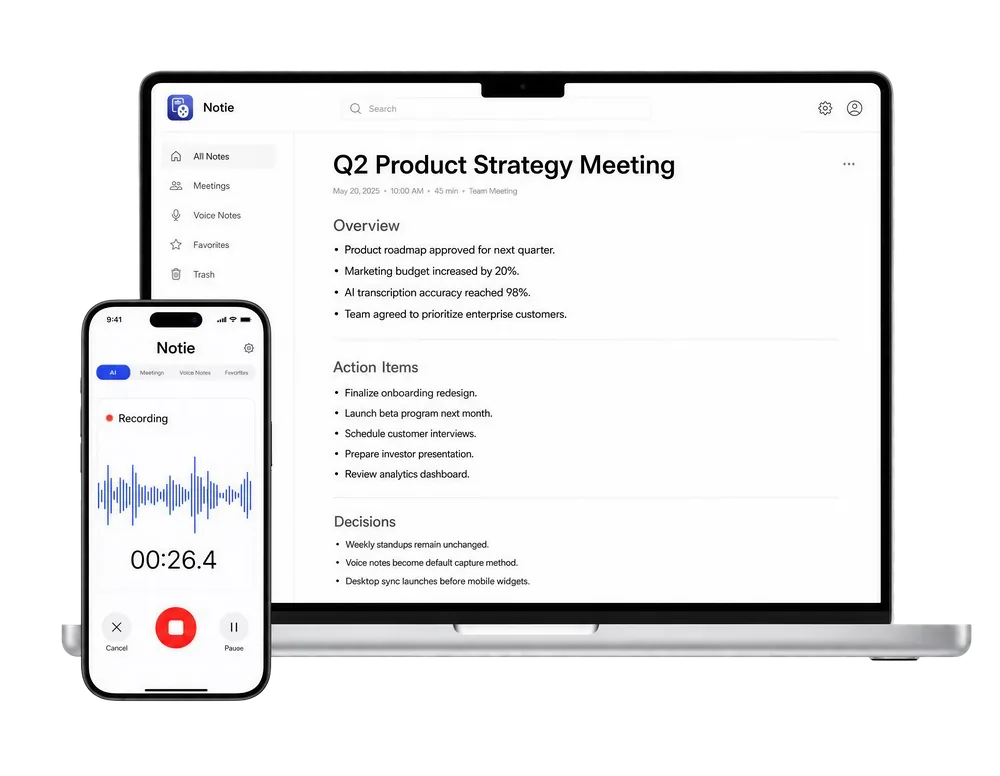
Perplexity searches the web and ChatGPT searches its training — but neither can tell you what your client said at 2 PM. Notie records and transcribes your meetings in 100+ languages, summarizes them with AI, and lets you ask questions about what was actually said. Get Notie free on iOS and Android.
Start for FreeAccuracy and Hallucinations
Both tools can be wrong, but they fail differently. ChatGPT's errors tend to be confident fabrications that read smoothly, while Perplexity's errors usually come from summarizing a weak source, which at least leaves you a link to check. The practical rule: use Perplexity when being right matters more than sounding good, and always verify high-stakes claims yourself regardless of tool. Google has entered this space too; see how AI Overviews compare for everyday searches.
The Workflow Most Power Users Land On
- Research with Perplexity to gather facts with citations.
- Draft with ChatGPT using those verified facts as raw material.
- Summarize supporting documents with an article summarizer to speed up reading.
- Capture conversations with Notie so meetings and interviews become searchable text alongside your research; its AI chat even lets you question your own transcripts.
- Verify anything critical against primary sources before publishing.
ChatGPT versus Perplexity is not really a battle, it is a division of labor. Perplexity is the librarian, ChatGPT is the writing partner, and specialized tools like Notie cover the conversations neither can hear. For where they sit in the broader market, see our guide to the top AI platforms.