PDFs are built to look identical everywhere — which is exactly what makes them painful to translate. The text is locked into a layout, sometimes it isn't even text at all (scanned pages are just images), and copying paragraphs into a translator one by one destroys both your patience and the formatting.
The good news: modern AI translation handles full documents in one pass. Here are five methods that work in 2026, from instant free tools to approaches for scanned files and confidential contracts, plus honest notes on when a human translator is still worth the money.
Method 1: Use a Dedicated AI PDF Translator (Fastest)
- Open a PDF translator in your browser.
- Upload the file and choose your target language.
- Let the AI process the document — modern tools preserve paragraphs, lists, and general structure.
- Download the translated version and skim key sections against the original.
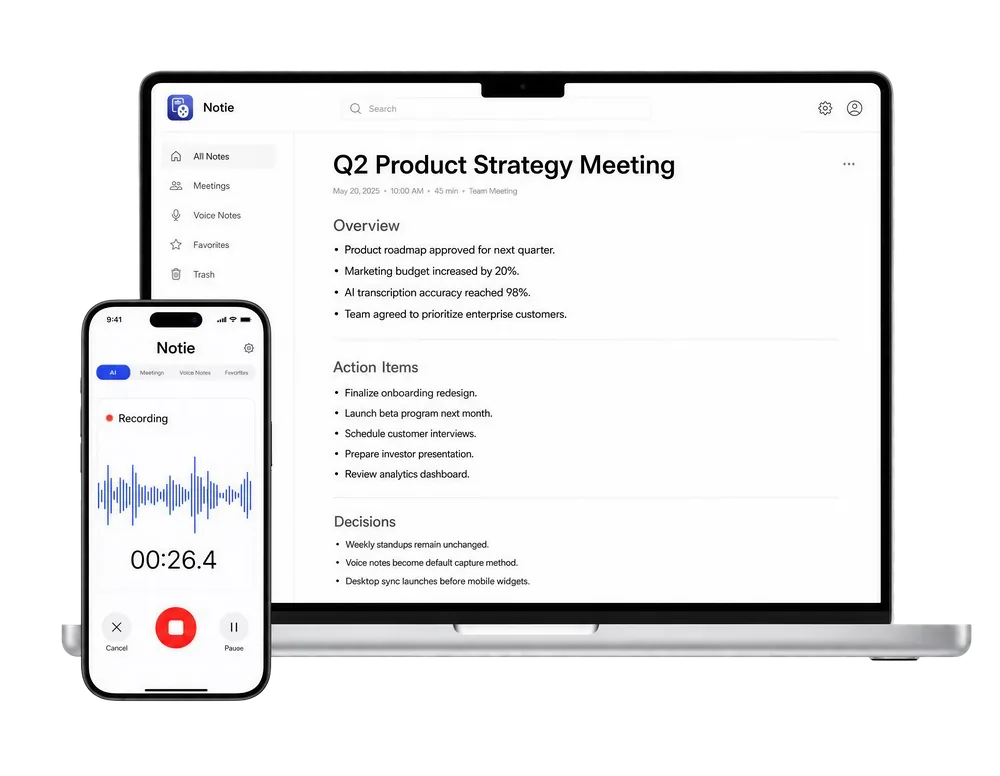
This is the best default for most people: no installation, handles long documents, and keeps the reading flow intact. Notie's web tools run on the same AI translation engine that powers its mobile app, which supports 100+ languages.
Method 2: Google Translate's Document Upload
Go to translate.google.com, switch to the Documents tab, upload the PDF, and download the result. It is free and fast, with two caveats: complex layouts (tables, multi-column pages) can come back scrambled, and there are file size limits. For quick gist-level translation of simple documents, it is hard to beat.
Method 3: Ask an AI Chatbot
ChatGPT, Claude, and Gemini all accept PDF uploads and translate on request. The advantage is control: you can ask for a formal register, a summary translation, or explanations of ambiguous phrases. A chat with PDF tool takes this further, letting you ask questions about the document in your own language without translating the whole thing. The trade-off is that very long files may hit upload limits, and output arrives as text rather than a formatted PDF.
Translate more than documents
PDFs are only half the language barrier. Notie translates the spoken world too — meetings, lectures, and voice notes transcribed and translated across 100+ languages, live. One app for everything you read and hear. Download Notie free on iOS and Android.
Start for FreeMethod 4: Scanned PDFs — OCR First, Then Translate
If you cannot select text in the PDF, it is a scan, and translators need actual text to work with. Run it through a PDF to text tool with OCR to extract the words, then translate the output with any method above. Quality of the scan matters: crooked, low-resolution pages produce OCR errors that become translation errors, so re-scan at higher quality if the result looks garbled.
Method 5: Professional Translation for High-Stakes Documents
For contracts you will sign, immigration paperwork, medical records, or anything where a mistranslated clause has consequences, hire a certified translator — many jurisdictions require certification anyway. The smart workflow is hybrid: use AI translation to understand the document immediately and decide what matters, then send the critical pages for professional translation.
Which Method Should You Use?
| Situation | Best method |
|---|---|
| Everyday documents, reports, manuals | AI PDF translator |
| Quick gist of a simple file | Google Translate documents tab |
| Need to ask questions about the content | Chat with PDF |
| Scanned or photographed pages | OCR to text, then translate |
| Legal, medical, official documents | Certified human translator |
Translating a PDF document went from a copy-paste marathon to a one-upload job. Pick the method that matches the stakes, always spot-check names and numbers, and for long documents consider pairing translation with a PDF summarizer so you translate only the sections worth reading in full.