You have a video full of useful information, and you need what was said in writing. Maybe it is a lecture to study from, a client call to document, or a webinar you want to turn into a blog post. Whatever the source, learning how to transcribe video into text saves hours of rewatching and makes every spoken word searchable.
There are four main ways to get it done: AI transcription tools, manual typing, platform auto-captions, and professional services. Each one trades off speed, cost, and accuracy differently. This guide walks through all four so you can pick the right method for your project, plus practical tips for cleaner results.
Why Transcribe Video into Text at All?
Text is easier to scan, quote, search, and translate than video. A transcript turns a 60-minute recording into something you can skim in five minutes, and it unlocks a few other wins:
- Searchability: find the exact moment a topic came up without scrubbing the timeline
- Accessibility: transcripts and captions serve deaf and hard-of-hearing viewers
- Repurposing: turn talks and interviews into blog posts, show notes, or social snippets
- SEO: search engines index text on your pages, not the speech inside your videos
- Record keeping: meetings and interviews become documents you can cite and share
Method 1: AI Transcription Tools (Fastest for Most People)
AI speech recognition has improved dramatically, and for clear audio it now delivers accuracy that rivals human transcribers at a fraction of the time and cost. A typical one-hour video is transcribed in minutes. Here is the basic workflow:
- Upload your video file to a free video to text tool in your browser.
- Choose the spoken language if the tool does not detect it automatically.
- Wait for processing, which usually takes a few minutes even for long files.
- Review the transcript, fix names and jargon the AI may have missed, and export it as text or subtitles.
This approach works for meeting recordings, lectures, interviews, and any clip saved on your device. If your source lives online, you can also extract content from a YouTube video and run it through the same process.
Method 2: Manual Transcription (When Every Word Must Be Right)
Typing a transcript yourself gives you full control, which matters for legal, medical, or research material where a single wrong word is a real problem. The catch is time: transcribing one hour of video typically takes a competent typist four to six hours, and longer when the audio has multiple speakers, crosstalk, or heavy accents. A practical middle path is letting AI produce the first draft, then proofreading it carefully against the video, which keeps the accuracy while cutting most of the labor.
Method 3: Platform Auto-Captions
YouTube, Zoom, TikTok, and most social platforms can generate captions automatically for videos you upload. They are free and require zero effort, but quality varies a lot with audio clarity, and you usually get limited editing and export options. Auto-captions are fine as a baseline for accessibility on casual content, but they are a shaky foundation for documentation, quotes, or anything you will rely on later.
Method 4: Hiring a Transcription Service
Professional services such as Rev use human transcribers, often reaching very high accuracy even on difficult audio with overlapping speakers or technical vocabulary. Pricing is generally charged per audio minute, and turnaround runs from hours to days depending on the tier you pay for. This is the right call when you need courtroom-grade accuracy or the recording quality is rough, and it is overkill for everyday meetings and content work.
Comparing the Four Methods
| Method | Speed | Cost | Accuracy |
|---|---|---|---|
| AI transcription tool | Minutes | Free or low cost | High with clear audio |
| Manual transcription | 4-6 hours per audio hour | Your time | Highest, if you are careful |
| Platform auto-captions | Automatic after upload | Free | Inconsistent, varies by audio |
| Professional service | Hours to days | Per-minute fees | Very high, even on hard audio |
Transcribe Meetings Right from Your Phone
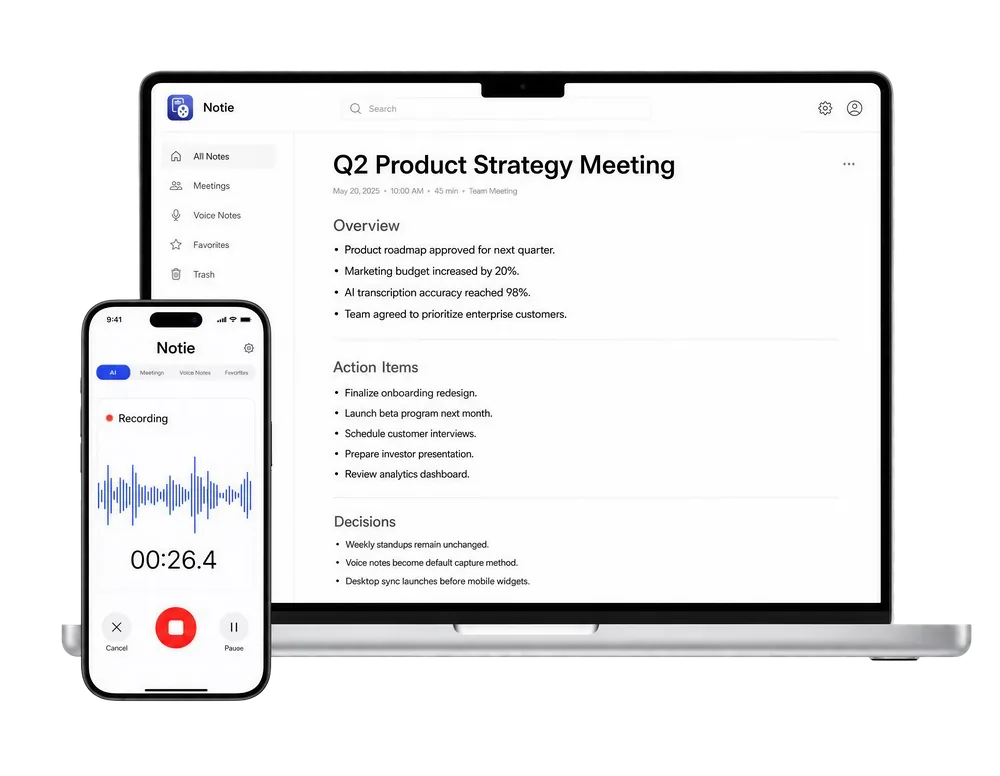
If most of your videos are meetings and calls, Notie removes the upload step entirely. It records on your phone, transcribes automatically with AI, and hands you a summary with action items the moment the conversation ends.
Start for FreeTips for a More Accurate Transcript
Whichever method you choose, transcription quality is mostly decided before the tool ever sees your file. A few habits make a big difference:
- Start with the best audio you can: an external microphone beats a laptop mic across the room.
- Reduce background noise and ask speakers not to talk over each other.
- Pick a tool that supports speaker separation if your video has multiple voices.
- Fix unusual names, acronyms, and jargon during your review pass; these are where AI slips most.
- Always proofread the final text against the video before publishing or sharing it.
Choosing the Right Output Format
Plain text is perfect for notes, articles, and search, while SRT or VTT files carry timestamps so the text can ride along with the video as captions. If you need subtitles, an AI subtitles generator produces timed caption files you can upload to any platform or burn into the video. When you want a clean, timestamped document rather than captions, a video transcript generator is the better fit. Decide on the format before you export so you do not have to run the job twice.
Transcribe Video to Text on Your Phone with Notie
Desktop tools are great for files you already have, but plenty of valuable audio happens away from your desk. Notie brings AI transcription to iOS and Android: record a meeting, lecture, or a video playing nearby, and the app turns the speech into accurate, searchable text, then summarizes the key points for you. For anyone who transcribes regularly, having that whole pipeline in your pocket changes how much you actually capture.
Final Thoughts
For most people, the fastest answer to how to transcribe video into text is an AI tool plus a quick human review, with manual transcription and paid services reserved for projects that truly demand them. Match the method to the stakes, protect your audio quality at the source, and you will spend minutes on transcripts that used to eat entire afternoons.