The digital video recorder changed how the world watches TV. Instead of racing home to catch a broadcast or juggling VHS tapes, a DVR quietly captures video to a hard drive so you can watch, pause, and rewind on your own schedule. That same core idea now powers everything from home security systems to the meeting recordings piling up on your laptop.
This guide explains what a DVR is, how it works under the hood, how it compares to cloud DVR and NVR systems, and, just as important, how to actually get value out of all that recorded footage instead of letting it gather digital dust.
What Is a Digital Video Recorder?
A DVR is a device that records video in digital format to a storage medium, usually an internal hard drive. Cable and satellite DVRs record television programming; security DVRs record camera feeds around the clock. Because the video is stored as data rather than on tape, you can pause live TV, skip ahead, store dozens of hours of footage, and jump to any moment instantly, all of which was impossible in the VCR era. TiVo made the concept famous in the late 1990s, and the acronym stuck even as the hardware evolved.
How a DVR Works
Every DVR follows the same basic pipeline, whether it is a cable box under your TV or a security recorder in a closet:
- Capture: the device receives a video signal from a TV tuner, a wired camera, or another input source.
- Encode and compress: the signal is converted into a digital format such as MPEG or H.264, shrinking file sizes without wrecking quality.
- Store: the compressed video is written to the hard drive, with the oldest recordings overwritten once space runs out.
- Index: the DVR tracks channels, timestamps, and recording schedules so footage stays organized and easy to find.
- Play back: on demand, the DVR decodes the stored file and sends it to your screen, complete with pause, rewind, and fast-forward.
DVR vs Cloud DVR vs NVR
Three similar acronyms describe three different setups, and choosing the wrong one for your needs gets expensive. Here is how they compare:
| Feature | DVR | Cloud DVR | NVR |
|---|---|---|---|
| Where video is stored | Local hard drive in the device | Provider's remote servers | Local network storage |
| Signal or camera type | TV tuner or analog cameras | Streaming TV services | IP (network) cameras |
| Storage limits | Fixed by drive size | Set by your subscription plan | Expandable drives |
| Access from anywhere | Usually local only | Any device with the app | Via network or mobile app |
| Typical user | Cable TV and older CCTV setups | Streaming service subscribers | Modern security systems |
What People Use DVRs for Today
- Time-shifted TV: recording live sports, shows, and news to watch later without missing a moment.
- Home and business security: continuous camera recording with motion-triggered clips saved as evidence.
- Sports and performance review: coaches record games and practices for frame-by-frame analysis.
- Content archiving: broadcasters, schools, and churches keep searchable archives of live productions.
- Meetings and webinars: the modern office equivalent, where calls are recorded for teammates who could not attend.
Meeting Recordings: The Modern DVR Habit
For most professionals today, the recordings that matter are not TV shows but video calls, webinars, training sessions, and screen captures. The workflow is the same DVR idea, capture now and review later, just with software instead of a set-top box. If you work on a Mac, our guide on how to screen record on a MacBook covers the built-in options. The real problem is what comes next: hours of footage that nobody has time to rewatch.
Make Your Recordings Actually Useful with Notie
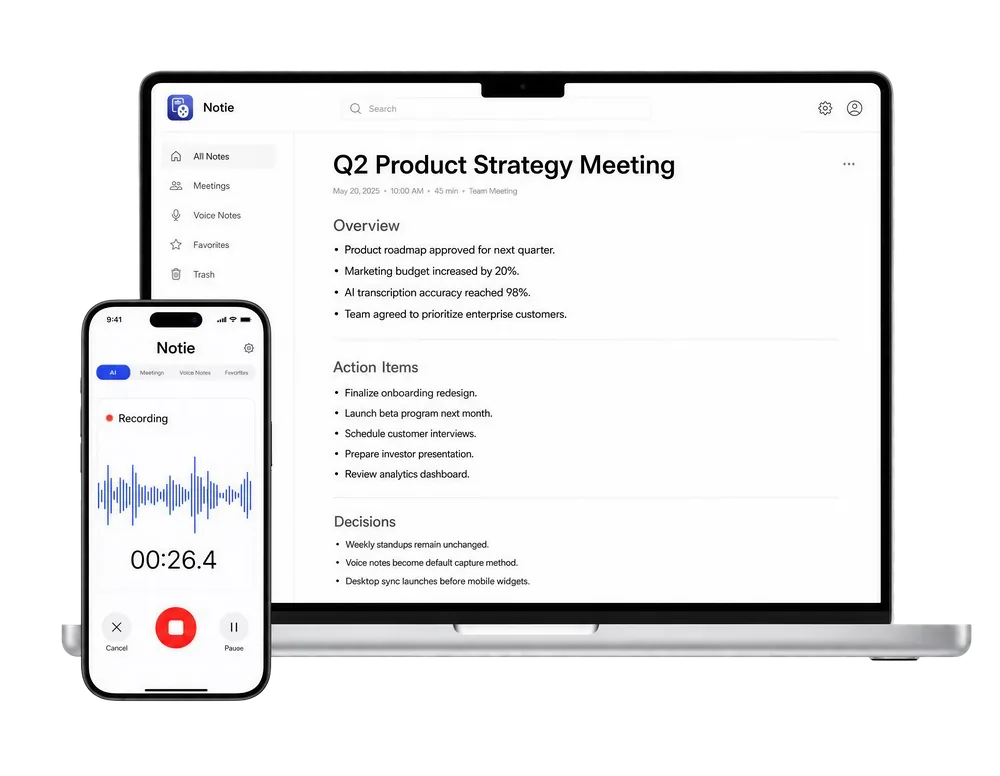
Notie turns recorded meetings and videos into searchable transcripts, AI summaries, and action items in minutes, so you never have to scrub through an hour of footage to find one decision. Try it free on iOS or Android.
Start for FreeHow to Get More From Recorded Footage
Convert Formats for Compatibility
DVRs, cameras, and screen recorders export in all kinds of containers, and not every player, editor, or upload form accepts them. A free online video converter switches files between MP4, MOV, AVI, and other formats in a couple of clicks, so your footage plays anywhere you need it to.
Compress Large Files
Hours of high-resolution recording eat storage fast, and oversized files are painful to email or upload. Running footage through a video compressor can shrink files dramatically while keeping them perfectly watchable, which is ideal for archiving old recordings or sharing highlight clips with a team.
Turn Recordings Into Searchable Text
The biggest unlock is transcription. A video transcript generator converts the speech in any recording into text you can search, quote, and skim, and Notie's video to text feature adds AI summaries on top, so a 60-minute recording becomes a one-page brief. Suddenly your archive is not a pile of files but a searchable knowledge base: type a keyword and jump straight to the moment it was said.
The Bottom Line
The DVR earned its place in history by putting viewers in control of time, and that idea has long since outgrown the living room. Whether the source is a security camera, a cable box, or this morning's team call, recorded video is only as valuable as your ability to find what is inside it. Convert it, compress it, and above all transcribe it with a tool like Notie, and every recording starts paying you back.