For two decades, browsers competed on speed and tabs. ChatGPT Atlas — OpenAI's browser, launched in late 2025 — competes on something else entirely: it puts ChatGPT beside every page you visit, remembers your browsing context if you let it, and can even operate websites on your behalf.
So what is ChatGPT Atlas exactly, what does it change about everyday browsing, and should you move from Chrome or Safari? Here is the practical rundown.
What Is ChatGPT Atlas?
Atlas is a web browser built by OpenAI with ChatGPT integrated at its core rather than bolted on as an extension. It launched first on macOS, with other platforms following. The pitch: instead of copying text out of pages and pasting it into a chatbot, the chatbot lives in the browser and can see what you see — summarizing articles, comparing products, drafting replies, and answering questions about the page in a sidebar.
Key Features
- ChatGPT sidebar: ask questions about any open page — summarize, explain, translate, extract — without switching tabs.
- Browser memories (optional): Atlas can remember context from sites you visit, so you can ask things like "find that article about batteries I read last week."
- Agent mode: ChatGPT can navigate and act on websites for you — researching, filling carts, handling multi-step tasks — while you watch and can take over.
- Inline writing help: drafting and editing assistance directly in text fields, from emails to forms.
- Familiar basics: tabs, bookmarks, and imports from existing browsers, so switching costs stay low.
How Atlas Differs from a Normal Browser
| Task | Traditional browser | ChatGPT Atlas |
|---|---|---|
| Long article | Read or skim it yourself | Sidebar summary, then targeted questions |
| Product research | Ten tabs and a spreadsheet | Ask for a comparison across pages |
| Repetitive web tasks | Click through manually | Agent mode executes while you supervise |
| Finding something you saw | Dig through history keywords | Ask memory in natural language |
Privacy: The Question to Ask First
A browser that remembers your browsing is genuinely useful and genuinely sensitive. Atlas makes memories opt-in, lets you view and delete them, and supports excluding specific sites — but the calculus is personal. Agent mode also introduces new risks the industry is still hardening against, like malicious pages attempting to manipulate the agent. Sensible defaults: keep memories off until you feel the need, supervise agent tasks involving logins or payments, and treat Atlas like any powerful new tool — adopt gradually.
AI for your browser — and for your meetings
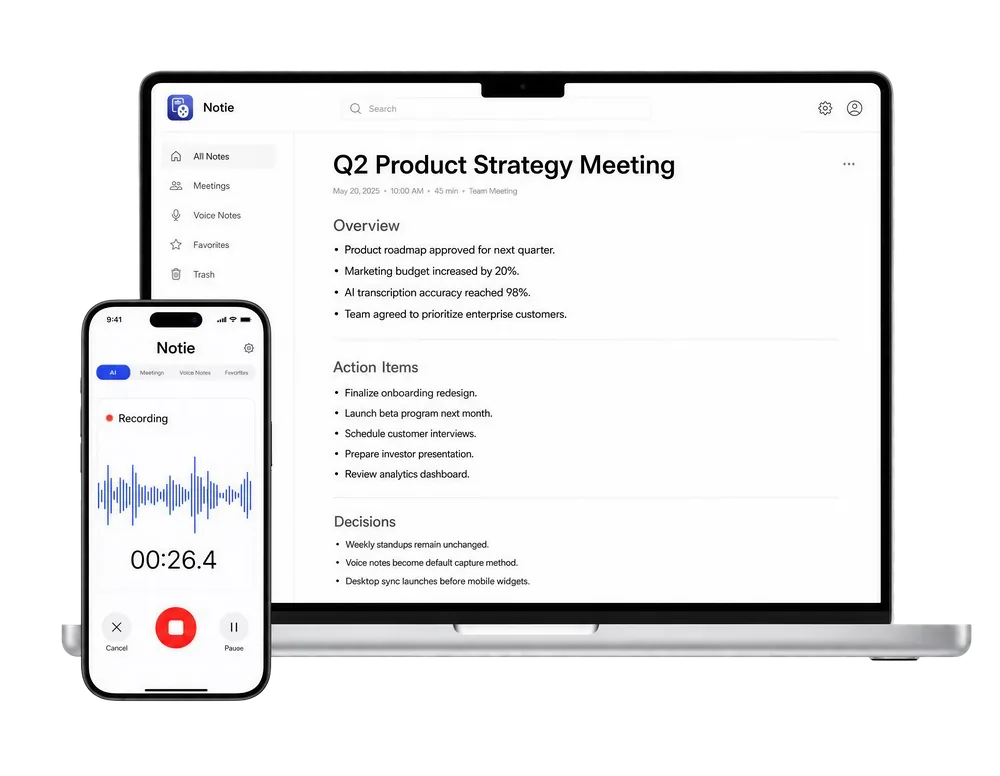
Atlas brings AI to what you read. Notie brings it to what you say: meetings, calls, and voice notes become transcripts, translations, and summaries automatically. Get Notie free on iOS and Android.
Start for FreeShould You Switch?
Try Atlas as a secondary browser if you already lean on ChatGPT daily — the sidebar alone removes constant copy-paste, and research-heavy work benefits most. Hold off if your workflow depends on specific extensions, you are cautious about AI handling sensitive accounts, or you are outside supported platforms. Competition is moving fast: Google is pushing Gemini into Chrome and other AI browsers like Perplexity's Comet are racing for the same ground, which means features will keep shifting whichever you choose.
The Bigger Picture
Atlas is one front in a broader shift: AI moving from destination apps into the surfaces where work happens — browsers, documents, and conversations. The same logic powers tools like an AI summarizer for documents or Notie for meetings: bring the intelligence to the content instead of shuttling content to the intelligence. For how Atlas fits among assistants, models, and generators, see our guide to the best AI tools.