If you have typed "what is the best AI to create images" into a search bar, you have discovered the problem: every list names a different winner. That is because there is no single best generator — there is a best generator for photorealism, a best one for brand-safe commercial work, and a best one for tinkerers who want full control.
This guide compares the leading AI image generators by what they are actually good at, so you can pick one in five minutes instead of testing seven.
The Top AI Image Generators at a Glance
| Tool | Best for | Standout trait |
|---|---|---|
| Midjourney | Artistic, stylized imagery | Consistently striking aesthetics |
| DALL-E (in ChatGPT) | Ease of use, iteration by chat | Edit images conversationally |
| Google Gemini / Imagen | Realism and text rendering | Strong prompt understanding |
| Adobe Firefly | Commercial and brand work | Trained on licensed content |
| Stable Diffusion | Full control and customization | Open weights, runs locally |
| Ideogram | Text inside images | Reliable typography in graphics |
| Canva AI | Quick social graphics | Built into a design workflow |
How to Choose: Match the Tool to the Job
For Striking Visuals: Midjourney
Midjourney remains the go-to for images with a strong artistic point of view — concept art, moody scenes, and stylized illustration. The tradeoff is less literal prompt-following: it interprets rather than obeys.
For Beginners: DALL-E Inside ChatGPT
If you already use ChatGPT, image generation is a sentence away. You can refine results conversationally — "make it warmer, remove the third person" — which is the friendliest editing loop for non-designers.
For Commercial Safety: Adobe Firefly
Firefly is trained primarily on licensed and Adobe Stock content, which makes legal and brand teams breathe easier. It also plugs straight into Photoshop for generative fill and extend.
For Control Freaks: Stable Diffusion
Open models let you run generation locally, fine-tune styles, and build custom pipelines. The learning curve is real, but no hosted tool matches the flexibility.
Capture the creative brief, not just the image
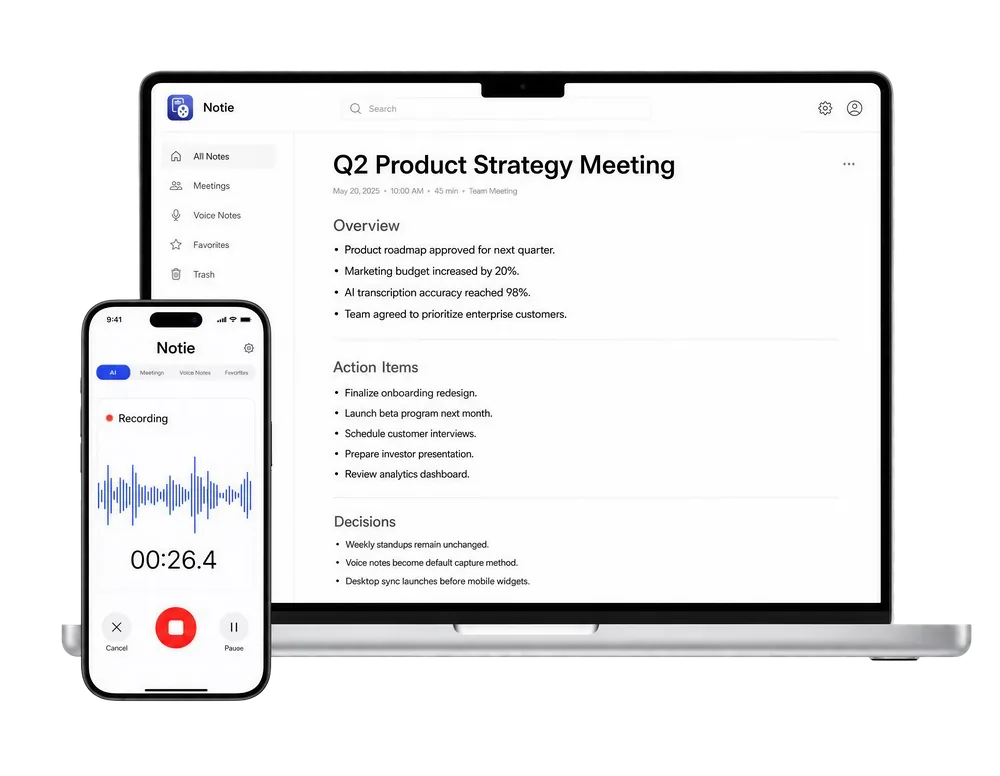
Great AI images start with clear direction from real conversations. Notie records your creative reviews and client calls, transcribes them, and summarizes the feedback — so your next prompt reflects what was actually agreed. Free on iOS and Android.
Start for FreePrompting Tips That Work Across Every Generator
- Describe the subject, style, lighting, and framing — in that order.
- Name a medium: "35mm photo," "watercolor," or "3D render" changes everything.
- Iterate in small steps. Change one variable per generation to learn what the model responds to.
- Keep a prompt log. When a prompt works, save it. Teams often collect winning prompts in shared notes — Notie users summarize brainstorm sessions where prompt ideas surface.
- Draft prompts with a text model first. An AI text generator can expand a rough idea into a detailed prompt.
What About Licensing and Ethics?
Rules differ by tool and are still evolving. As a working policy: check each platform's commercial-use terms before publishing, avoid generating identifiable real people without consent, and disclose AI-generated imagery where your audience would expect it. For client work, Firefly's licensed training data currently offers the most conservative option.
The Verdict
For most people, the answer to "what is the best AI to create images" is: Midjourney if you want art, DALL-E in ChatGPT if you want ease, Firefly if you want commercial safety, and Stable Diffusion if you want control. Image generation is only one corner of the AI toolbox — see our roundup of the best AI tools for the full picture, from chatbots to AI story generators.