Descript's pitch is genuinely different: instead of dragging clips on a timeline, you edit audio and video by editing the transcript. Delete a sentence in the text, and that sentence disappears from the recording. For podcasters, course creators, and marketing teams producing talking-head content, that single idea collapses hours of editing into minutes.
After years on the market, Descript has matured into a full production suite with AI voices, screen recording, and one-click cleanup. But it is not the right tool for everyone. This review covers what it does well, its honest weaknesses, and which alternatives fit specific jobs better.
What Descript Actually Does
- Text-based editing: cut, rearrange, and tighten audio or video by editing the transcript.
- Filler word removal: delete every "um," "uh," and "you know" in one click.
- Studio Sound: AI cleanup that makes laptop-mic audio sound close to studio quality.
- Overdub voice cloning: type corrections and hear them in your own cloned voice.
- Screen recording: capture, edit, and share recordings in the same project.
- Eye contact and green screen effects: AI-powered polish for talking-head video.
The Strengths
The editing workflow is the star. For interview-style content, editing text instead of waveforms is faster in a way you have to feel to believe, and the learning curve is gentler than traditional editors like Premiere. Studio Sound rescues mediocre recordings surprisingly well, and collaboration feels like Google Docs, with comments and shared projects. Transcription accuracy is strong for clear English audio, and the automatic subtitle generation style tools built into the export flow save real time.
The Weaknesses
- Desktop-first: the full experience lives on Mac and Windows; there is no serious mobile capture-and-edit workflow.
- Performance on long projects: multi-hour, multi-track projects can get sluggish.
- Precision editing limits: frame-accurate visual effects work still belongs in a traditional NLE.
- Pricing pressure: costs stack up per editor seat and transcription hours on higher tiers.
- Accent sensitivity: transcription accuracy drops with heavy accents or crosstalk, which means more manual correction before you can edit by text.
Descript Pricing in Brief
Descript offers a free tier with limited transcription hours and watermark-free basics, then paid tiers that scale transcription hours, export quality, and AI features per seat. Exact limits shift regularly, so check the current pricing page, but budget roughly in the range of typical creator-tool subscriptions. The free tier is a genuine trial, enough to know within a week whether the workflow clicks for you.
Need the transcript more than the timeline?
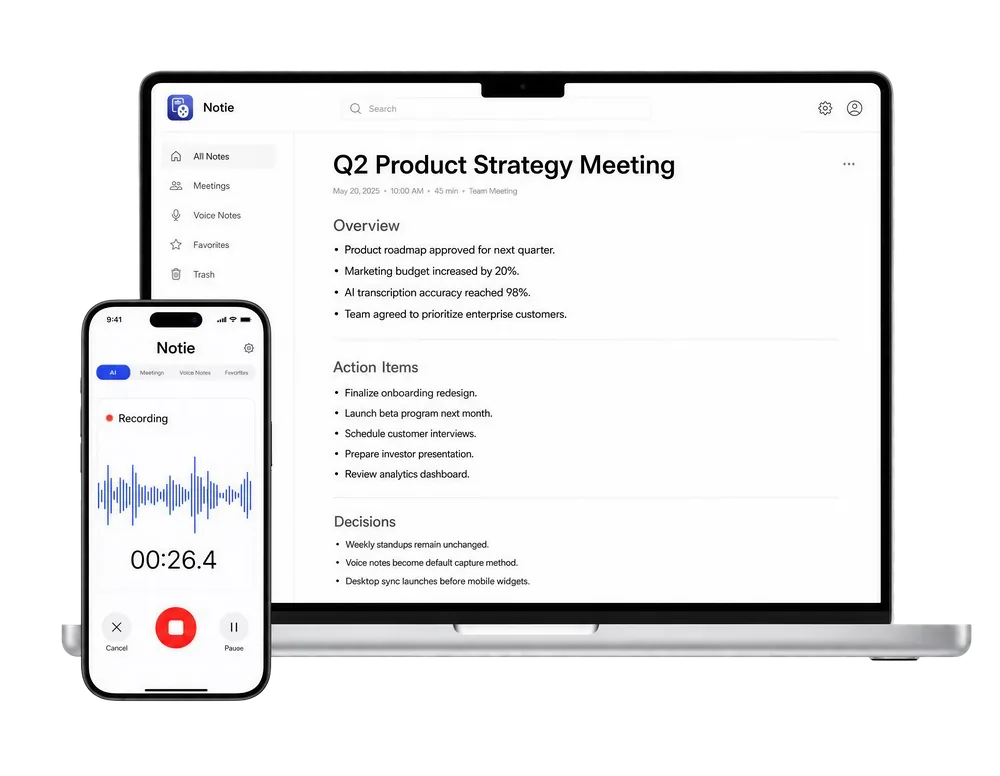
If your real goal is capturing and understanding conversations — not producing polished video — Notie is the lighter, faster tool. It records meetings, lectures, and interviews on your phone, transcribes them in 100+ languages, and delivers AI summaries instantly. Try Notie free on iOS and Android.
Start for FreeDescript vs Alternatives: Match the Tool to the Job
| Your job | Best fit | Why |
|---|---|---|
| Podcast and video editing | Descript | Text-based editing is unmatched for spoken content |
| Meeting notes and summaries | Notie | Mobile recording, 100+ languages, automatic AI summaries |
| Cinematic or effects-heavy video | Premiere / DaVinci Resolve | Frame-level control and grading |
| Human-verified transcripts | Rev | Professional transcription accuracy |
| Quick transcripts from video files | Free web tools | No install; try a video transcript generator |
Who Should Use Descript?
Descript is an easy recommendation for podcasters, YouTubers, course creators, and marketing teams editing spoken-word content weekly. It is overkill if you just need words out of a recording — a video transcript generator or transcribe video to text tool gets you there free — and it is the wrong base for effects-heavy filmmaking. And if your recordings are meetings rather than media, an AI note taker like Notie skips the editing entirely and hands you the summary.
Verdict: Descript earns its reputation. It rethought editing around the transcript and the bet paid off. Just pick it for what it is — a production tool for creators — and pair it with lighter tools for transcription-only jobs.